
Products
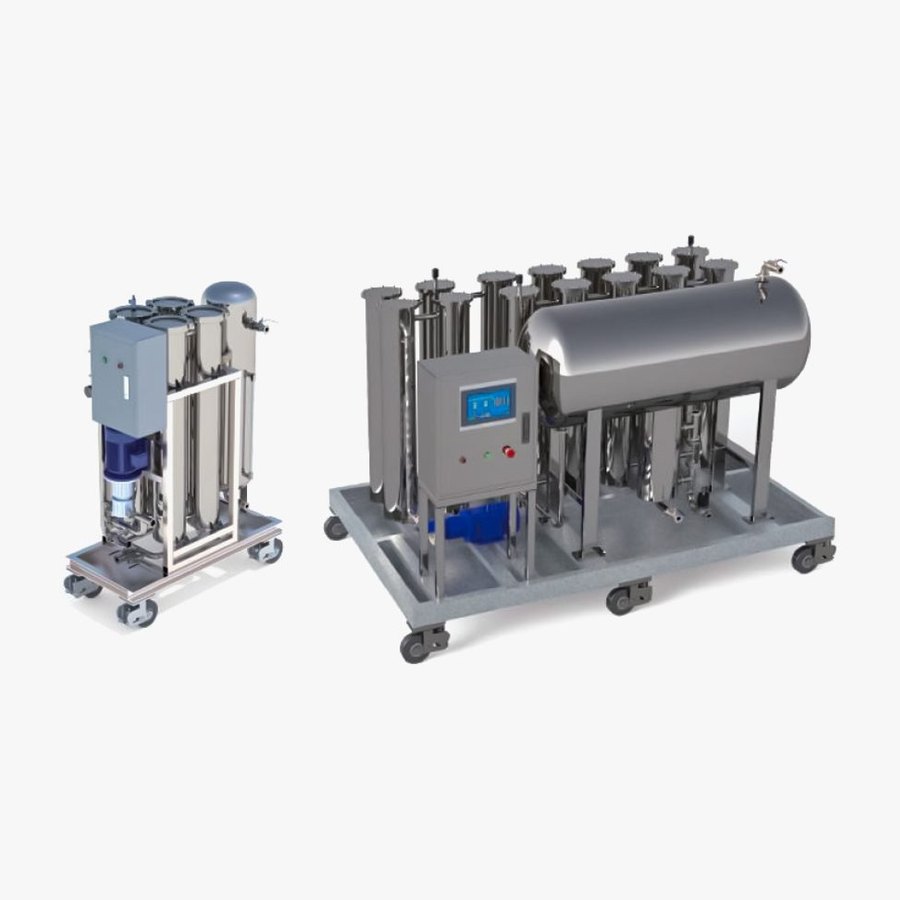
Polymer Dehydration Unit
Aviation kerosene, diesel, light fuel oil & low-viscosity lube dehydration
Light fuels and low-viscosity oils, water below 30 ppm.
- Water below 30 ppm without driving off the light ends
- A polymer stage instead of heat, so kerosene stays kerosene
- Coalescer ahead of the polymer stage where free water is present in bulk
- Emailgary@fengmingep.com
- Phone+86-17306307795
Technical specifications
| Water content after treatment | Below 30 ppm |
|---|---|
| Fluid chemistry | Aviation kerosene, diesel, light fuel oil and low-viscosity lubricating oils |
| Separation principle | Polymer dehydration, without stripping the light ends |
| Oil condition monitoring | Water-in-oil sensor on the outlet |
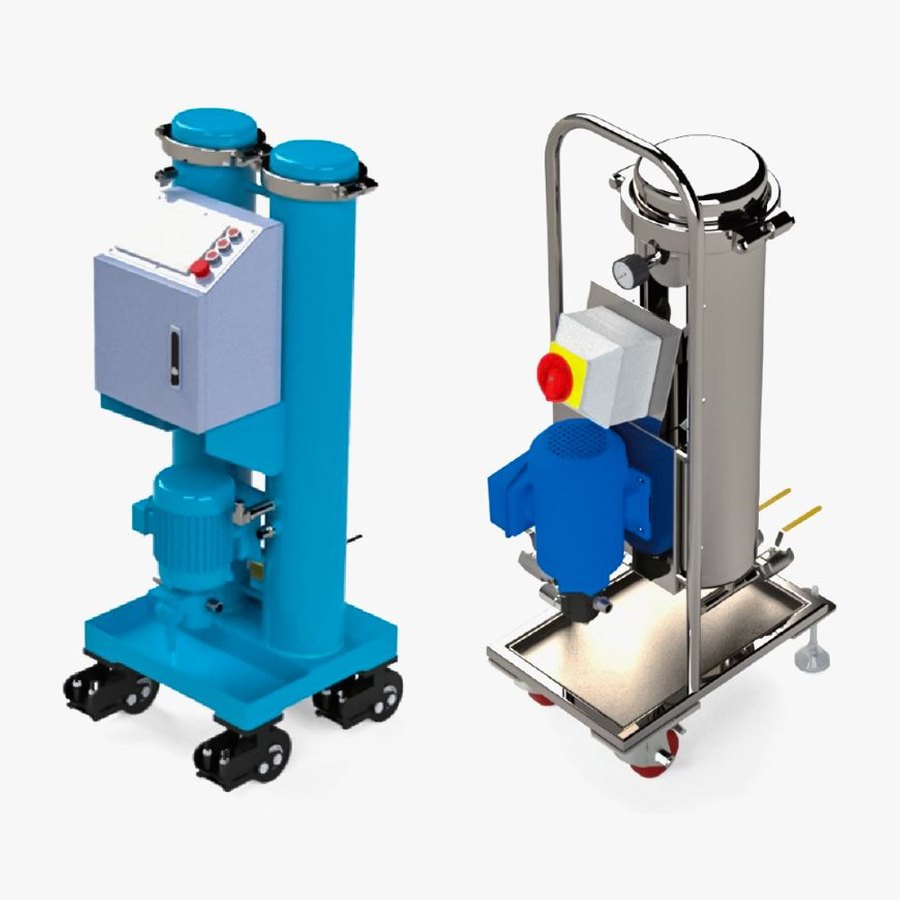
| Mounting | Stationary or mobile skid |
What it removes
Light fuels and low-viscosity oils hold water in a different way from heavy lube oil, and this unit is built for that. It removes free water and dissolved water from aviation kerosene, diesel, light fuel oil and low-viscosity lubricating oils down to below 30 ppm, together with the particulate the fuel carries. At that water level a light fuel stops clouding at low ambient temperature and stops supporting the microbial growth that turns a fuel system into a corrosion problem.
How it works
The unit uses a polymer dehydration stage rather than heat alone. Water in a light hydrocarbon is not easily boiled out without also driving off the light ends, so the water is taken up by a polymer medium and the fuel passes through without its volatility being disturbed. That is the reason for a separate product rather than a small vacuum purifier: heating kerosene or diesel to dehydrate it costs you the fraction you were trying to protect.
Where it is used
Fuel depots, aviation fuelling equipment, standby diesel systems for data centres and hospitals, and light-oil hydraulic systems. The same problem shows up in lithium film production, where the oil has to be brought back to a usable colour and water content rather than replaced -- the mechanism is different but the constraint is the same: the fluid must come back to specification, not merely look cleaner.
Options and service
Stationary or mobile skid. Flow rates matched to the depot's transfer rate rather than to a tank volume. Water-in-oil monitoring on the outlet, and a coalescer ahead of the polymer stage where free water is present in bulk.
Common questions
Why not just use a small vacuum purifier?
Heating kerosene or diesel to dehydrate it costs you the light fraction you were trying to protect. The polymer medium takes up the water without disturbing volatility.
What water level does it reach?
Below 30 ppm, at which point a light fuel stops clouding at low ambient temperature and stops supporting microbial growth.
Where is it used?
Fuel depots, aviation fuelling equipment, standby diesel systems for data centres and hospitals, and light-oil hydraulic systems.
Tell us about your application
Oil type, viscosity, flow rate, target cleanliness, water content, on-site power and space constraints. The more specific you are, the sharper the proposal.
Hours: Monday - Friday: 09:00 - 18:00 (UTC+8) Saturday & Sunday: Closed Public holidays: Closed
Related products
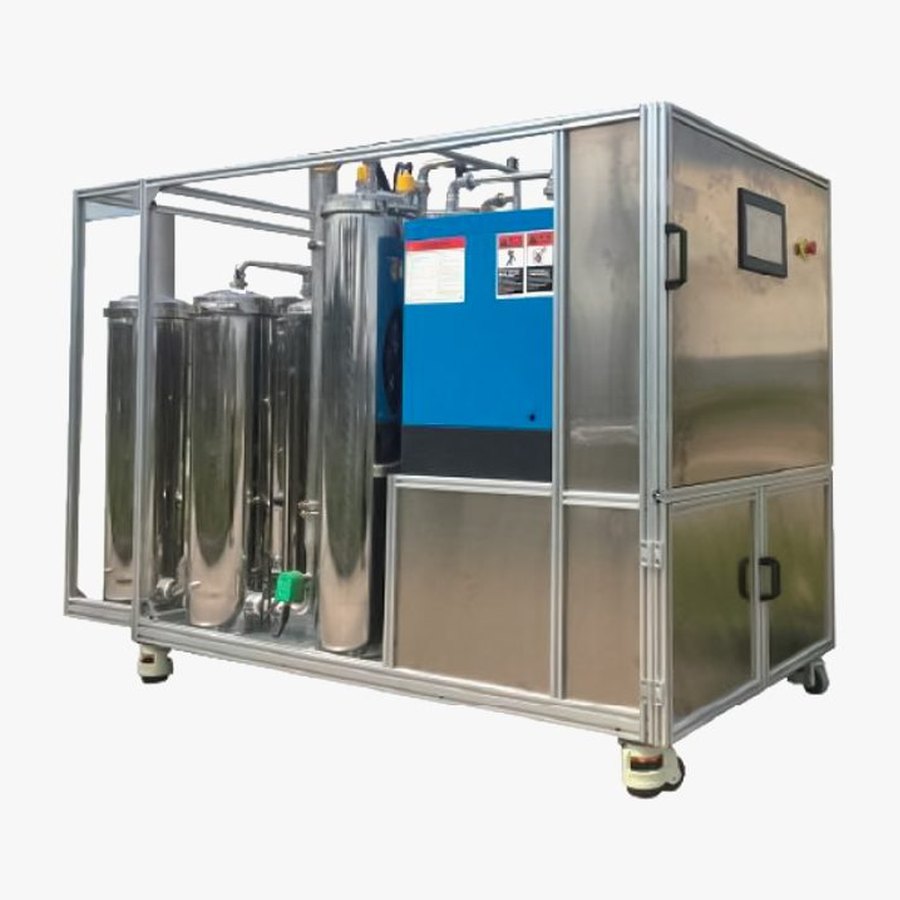 Standard Vacuum Oil Purifier (VOP Series)
Removes particulate, water and dissolved gas. NAS 6, water down to 50 ppm.
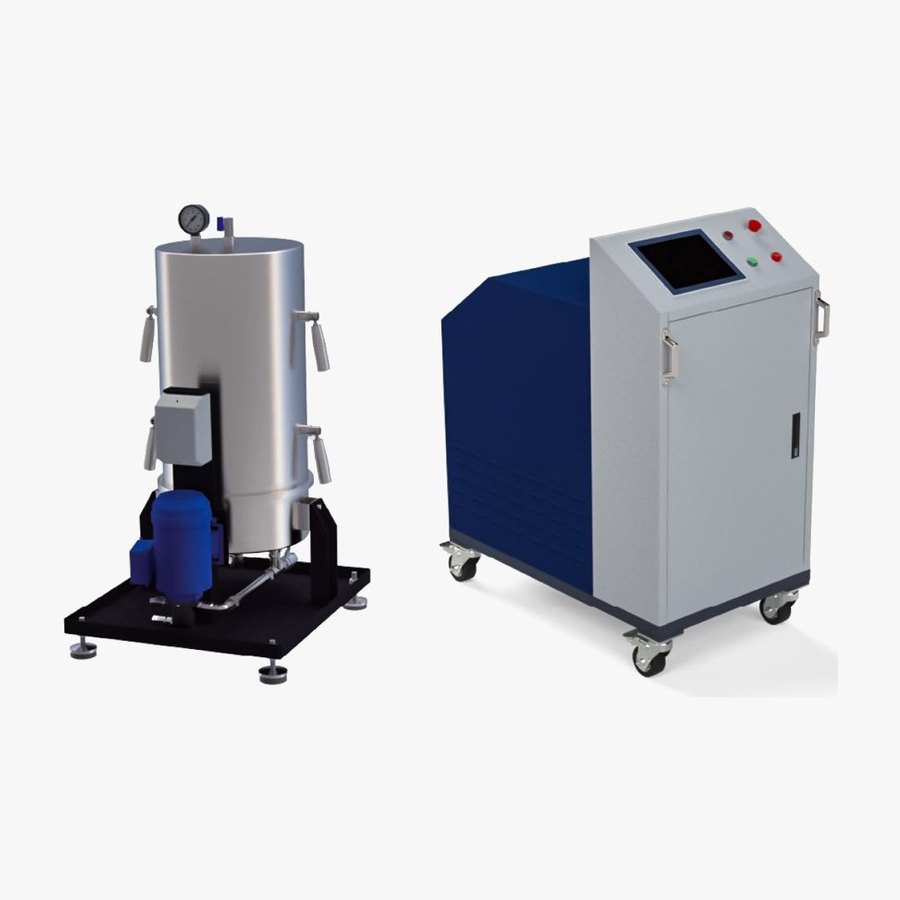 Vacuum Nano-Screening Integrated Machine (VOP-N Series)
Nano-screening membrane combined with vacuum dehydration, reaching NAS 2. The flagship model in the range.
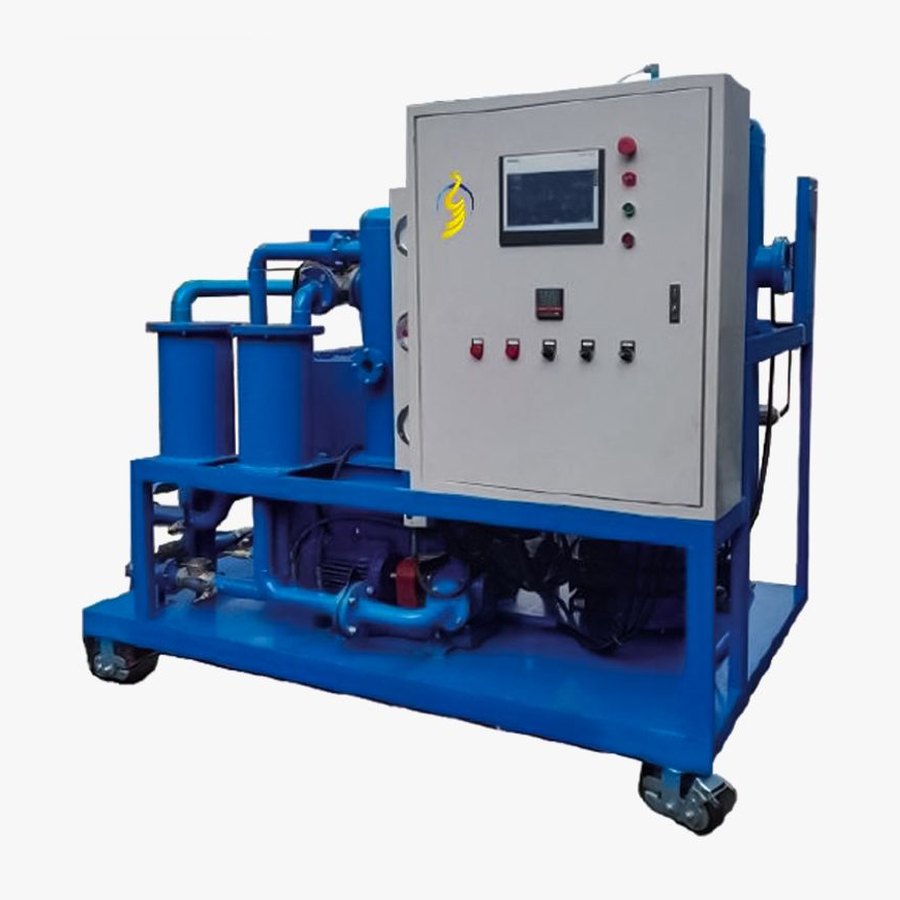 EHC Fire-Resistant Oil Ultra-Clean Purification Unit
For phosphate-ester EHC fluid in turbine governing systems.
 Automatic Centrifugal Slag Remover
Self-cleaning centrifugal separation. No filter media to replace.
