If your oil is not listed
These cases are grouped by oil and by failure mode. Describe the condition and it can be judged against these records: vacuum, membrane, centrifugal or electrostatic.

The measured index came back down to 26, inside limit.
200 litres of water came out on the day it was started; after a second ingress, over a tonne was drawn off across six days.
One pass on the nano-screening unit brought the contaminated oil to NAS 7.
Chronic water ingress had emulsified the fluid year after year. After treatment, water content held at 800 ppm.
A damaged shaft seal admitted 20 kg of water a day. The oil was treated online, without taking the unit down.
Gear oil contamination was causing repeated equipment failure. Deep purification restored it to the reuse standard.
Run through the decolourising system, the oil met the purification and regeneration target.
Service-station engine oil collected by a waste-oil processor was regenerated to the expected standard.
The station was reading far outside its limit. After treatment the measured figure came back at NAS 6.
Water content was over limit often enough that the oil was replaced again and again. Treatment reached NAS 3 and 39 ppm.
Mobil 525 oil-film bearing oil took in a large volume of water. The unit separated 2.2 tonnes within one day.
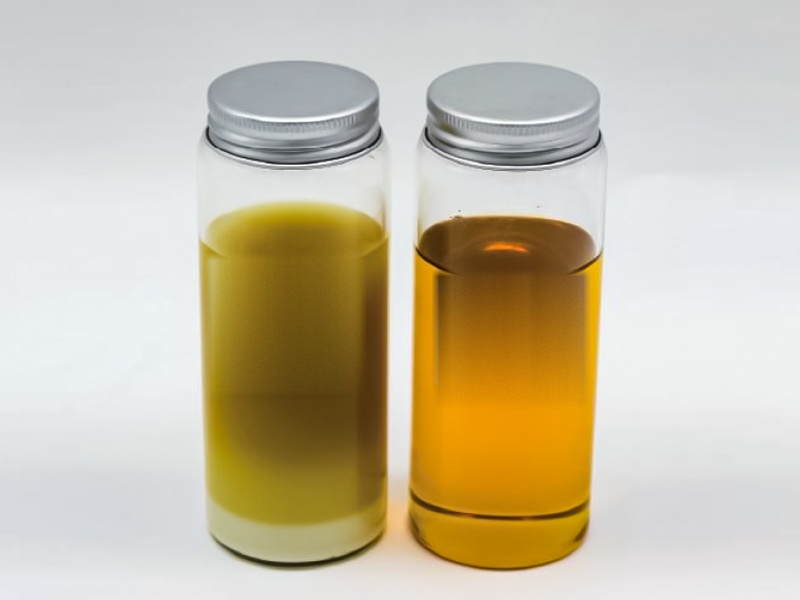
Mobil 525 oil-film bearing oil at a southwest steel plant had taken on a large amount of water. With nano-screening purification equipment, 2.2 tonnes of water were separated out within a single day.
Sorted by the fluid they started with. The tag on each one is the reading the instrument gave once the oil had been through the machine.
The industries behind the records.
These come up on almost every enquiry, whatever the industry.
These cases are grouped by oil and by failure mode. Describe the condition and it can be judged against these records: vacuum, membrane, centrifugal or electrostatic.

Industrial oil purification & water treatment solutions
Goweco Industrial Park, High-tech Zone
Weifang City, Shandong Province, P.R. China
Monday - Friday: 09:00 - 18:00 (UTC+8)
Saturday & Sunday: Closed
Public holidays: Closed